Today, at Vicarage Road, I will be back playing club rugby in England for the first time since I moved to Toulon. The Amlin Challenge Cup clash against Saracens is a big one for both sides anyway, but I’ll also be looking forward to being part of my new team on old soil. I’ll recognise a few players and I’ll be playing in a stadium I’ve played in a few times before. I’ve been with Toulon for half a season now — or half a year. The novelty has worn off, although the desire to succeed and improve grows ever greater. A sign of my enduring satisfaction with all things Toulon is that negotiations are under way to ensure that I stay here for another season. I feel so settled here now; I am enjoying the rugby there still and I want more of it. So we are in one of those phases where it seems a lot is going on. Toulon and Saracens today, and I was delighted to be named again yesterday in the England senior squad — which means, of course, that the Six Nations is already just around the corner. As usual, though, the emotions of the moment and the size and significance of the occasion are a kind of background noise when set against that basic need and desire to perform. We have a massive respect for Saracens and we know tonight we will be walking into a very intense and competitive arena. But playing back on English soil is irrelevant once kick-off time comes and we are back to the basics of one squad of players versus another. For me, a huge part of my game now is focusing on getting right the balance between functioning as an individual on the pitch and as a cog within the grander game plan. The liberating side of the game is when you can play more as an individual, but, especially being a fly half, there are extra responsibilities associated with directing the team. As the No 10, you are like the quarterback, the director, making decisions for the team. But then again, there is also the need to play what is in front of you and to take opportunities that present themselves, even when they are not in the game plan; you have a responsibility to play things off the cuff. If you let the game plan overcrowd your mind too much, it will impair your judgment and you might miss an opportunity in front of you. When you are switching from one to the other, it is very hard to get it exactly right. When I started with Toulon, at the beginning of the season, after the best part of a year out of the game, I thought that a run of matches would help me to find the right balance. I thought: ten more games, ten more. But now I am resigned to the fact that I will always want more matches, more time. That is not to suggest I am in any way short of positivity or confidence, I just understand that there will always be the need to build the instinctive and creative side of my game. In this respect, it is an interesting challenge when you go from playing for your club to playing for your country. When you are playing for your club, in a league, you have a much better idea, week by week, of what is coming your way, so you are better able to anticipate the game and game situations. The Six Nations, though, is more like a series of one-off games. No matter how much you prepare, there remains the feeling that you have to play more off the cuff. I am the kind of player who likes information, who likes to be able to analyse in advance, to mull over the kind of game that is ahead of you. The inherent danger there is in becoming a bit robotic and I’d hate to be like that. One of the most difficult parts of the game is reviewing your performance in the previous game and thinking: “I should have done this or that, I missed an opportunity.” Some of the players I enjoy watching most are the ones who make opportunities for themselves out of nothing; Rupeni Caucaunibuca, for instance, who plays in France, does things that astound you.

Jonny Wilkinson loving it in France Fly half delighted to be back on English territory as he celebrates being named in international squad

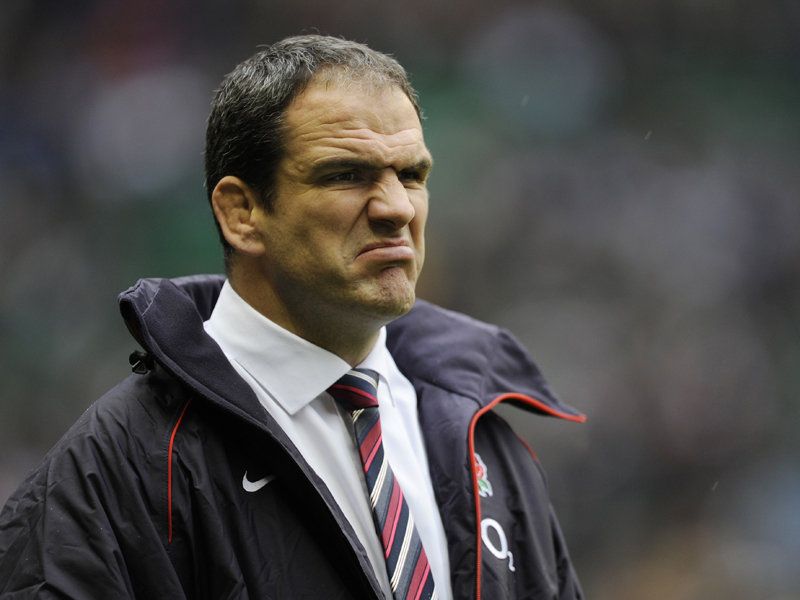
England manager Martin Johnson could be set to throw caution to the wind ahead of the RBS Six Nations. Johnson and his side came in for heavy criticism during the autumn internationals after a series of turgid and disappointing displays. A scrappy win over Argentina was sandwiched in between defeats to Australia and New Zealand. But more frustrating than the results themselves was the fact England lacked any direction or creativity in the defeats, managing just one try and 31 points. However there have been rumblings from Twickenham that Johnson is now ready to throw off the shackles and give his players more attacking freedom. With the highly-rated Brian Smith as his attack coach, Johnson has one of the best men in the business to implement a new creative approach - and it looks likely Wednesday's EPS and Saxons squad announcements will see the players named to breathe life into England's game. Johnson is almost certain to recall Delon Armitage, Riki Flutey, Nick Easter and Toby Flood to his 32-man elite squad for the championship - but there could also be one or two surprises. Northampton trio Chris Ashton, Ben Foden and Courtney Lawes, Leicester's Dan Cole and Ben Youngs, centres Shontayne Hape and Dominic Waldouck, Worcester prop Matt Mullan and Saracens' Andy Saull are among those pushing for key roles. The return of Flutey, who impressed on his comeback for Brive against Perpignan, will certainly solve the problem over who to play at inside centre.